

How to Choose the Right eCommerce Platform? In 2026, there are more eCommerce platform options than at any point in history. And that abundance is both a blessing and a trap.
The wrong platform choice does not just slow you down. It actively works against you — capping your performance, draining your development budget, and forcing a painful migration at the worst possible time. According to a 2025 Forrester study, 41% of mid-market eCommerce businesses undergo a full platform migration within four years — most because they chose the wrong platform the first time.
Table of Contents
- Why Choosing the Right eCommerce Platform Is the Most Important Decision You Will Make
- Step 1: Understand Your Business Model Before Evaluating Any Platform
- Step 2: Know the Five Platform Categories
- The 2026 Platform Comparison: The Major Players
- The Decision Matrix: Which Platform Wins for Your Situation?
- The 7 Questions You Must Answer Before Choosing a Platform
- Red Flags When Evaluating eCommerce Platforms
- The Migration Question: When Is It Time to Switch?
- Conclusion: Make the Decision Like a CEO, Not a Consumer
This guide will make sure you are not one of them.
Why Choosing the Right eCommerce Platform Is the Most Important Decision You Will Make
Your eCommerce platform is not a tool. It is your business infrastructure. Everything else you build — your marketing stack, your ERP integration, your customer experience, your fulfillment operations — runs on top of it. A weak foundation creates compounding problems that grow more expensive and complex with every dollar of revenue you add.
The stakes have never been higher:
- Global eCommerce sales are projected to exceed $8.1 trillion by 2026 (Statista, 2025)
- Platform switching costs for a mid-market brand average $150,000–$500,000 when you include development, data migration, SEO recovery, and integration rebuilds
- The right platform can improve site performance, conversion rates, and operational efficiency simultaneously
This is a decision worth investing serious time in. And this guide gives you the framework to make it confidently.
Step 1: Understand Your Business Model Before Evaluating Any Platform
Every platform has a bias — a type of business it was built to serve best. Before you look at a single feature comparison, get crystal clear on who you are:
What is your revenue model?
- Direct-to-consumer (DTC)
- B2B wholesale
- Hybrid DTC + B2B
- Marketplace seller
- Subscription-based
- Digital products only
What is your current and projected order volume?
- Under 100 orders/day: Almost any platform works
- 100–1,000 orders/day: Performance and automation matter significantly
- 1,000+ orders/day: Infrastructure, API access, and ERP integration become critical
What is your product complexity?
- Simple products with few variants
- Complex configurable products (custom options, dimensions, bundles)
- Digital products requiring licensing or delivery logic
- Subscription products with recurring billing
- B2B products with customer-specific pricing
What markets are you selling in?
- Single country
- Multi-currency, multi-language
- Cross-border with complex tax and compliance requirements
Your honest answers to these questions will eliminate half the platforms on the market before you look at a single pricing page.
Step 2: Know the Five Platform Categories
Category 1: Hosted SaaS Platforms
Examples: Shopify, BigCommerce, Squarespace Commerce, Wix eCommerce
You pay a monthly subscription. The platform hosts your store, handles security updates, manages infrastructure, and provides built-in features through a managed environment.
Pros: Fast to launch, low technical overhead, predictable costs, automatic updates, built-in security Cons: Less customization flexibility, dependent on platform roadmap, potential transaction fees, limits on certain platform behaviors
Best for: Businesses that want to move fast and focus on selling — not on managing infrastructure.
Category 2: Open-Source Self-Hosted Platforms
Examples: WooCommerce (WordPress), Magento Open Source (Adobe Commerce), OpenCart, PrestaShop
You download, host, and manage the software yourself (or pay a developer to do so). You own the code and have complete control.
Pros: Maximum flexibility, no platform vendor dependency, no transaction fees, full code access Cons: High technical overhead, security responsibilities, hosting costs, development costs, slower to launch
Best for: Businesses with strong development resources and highly custom requirements that no SaaS platform can meet.
Category 3: Enterprise SaaS Platforms
Examples: Shopify Plus, BigCommerce Enterprise, Salesforce Commerce Cloud, SAP Commerce Cloud
Full-featured enterprise platforms with dedicated support, SLAs, and advanced capabilities at premium price points.
Pros: Enterprise-grade infrastructure, dedicated support, advanced B2B and headless capabilities, robust API access Cons: High cost, longer implementation timelines, contract lock-in
Best for: High-revenue businesses ($5M+) with complex operational requirements.
Category 4: Headless Commerce Platforms
Examples: Commercetools, Fabric, Elastic Path, Shogun Frontend (on Shopify)
The commerce engine (cart, checkout, orders, inventory) is decoupled from the front-end presentation layer. You build your own front-end using modern web frameworks.
Pros: Unlimited design flexibility, exceptional performance, omnichannel delivery from a single backend Cons: Requires significant development investment, not appropriate for small teams, higher ongoing maintenance
Best for: Enterprise brands with unique experience requirements and dedicated development teams.
Category 5: Marketplace-Native Platforms
Examples: Amazon Seller Central, Etsy, eBay Stores
Not true eCommerce platforms in the traditional sense — but relevant for businesses whose primary channel is marketplace selling.
Best for: Sellers whose primary distribution strategy is leveraging existing marketplace traffic.
The 2026 Platform Comparison: The Major Players
Shopify (Including Shopify Plus)
Best for: DTC brands, mid-market, and enterprise businesses seeking a balance of ease, performance, and extensibility
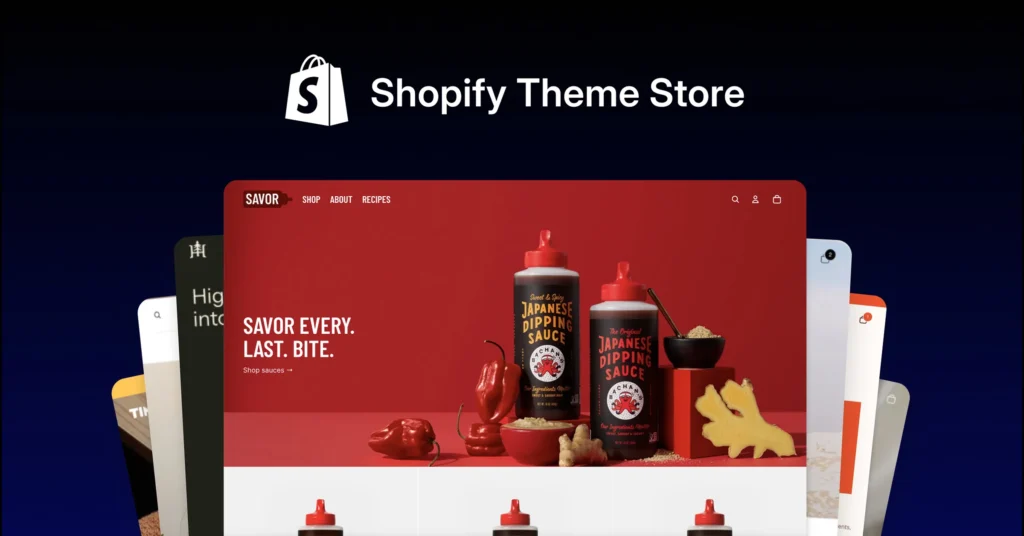
Shopify has cemented itself as the dominant SaaS eCommerce platform in 2026. Its ecosystem of 13,000+ apps, robust API, Shopify Plus enterprise tier, and deeply integrated payment infrastructure make it the default choice for most growing eCommerce businesses.
Strengths:
- Largest app ecosystem
- Superior checkout performance
- Best-in-class Shopify Payments integration
- Shopify Plus for enterprise with B2B, Flow automation, and headless support
- Excellent ERP integration partner ecosystem
Weaknesses:
- Transaction fees for non-Shopify Payments users
- Product variant limits (100 per product on standard plans)
- Customization ceiling on standard themes without developer involvement
Pricing: $29–$299/month standard; $2,300+/month for Plus
BigCommerce

Best for: Mid-market businesses with complex product catalogs, B2B needs, and a preference for no transaction fees
BigCommerce has positioned itself strongly in the B2B and mid-market space. It offers more native functionality out-of-the-box than Shopify (reducing app dependency) and charges no transaction fees on any plan.
Strengths:
- No transaction fees on any plan
- Superior native B2B functionality
- Unlimited product variants
- Strong multi-currency and multi-storefront capabilities
- Open SaaS approach (APIs without restrictions)
Weaknesses:
- Smaller app ecosystem than Shopify
- Less polished merchant experience
- Less developer mindshare
Pricing: $39–$399/month standard; Enterprise pricing on request
WooCommerce
Best for: Content-heavy brands on WordPress, businesses needing deep customization, and cost-conscious operators
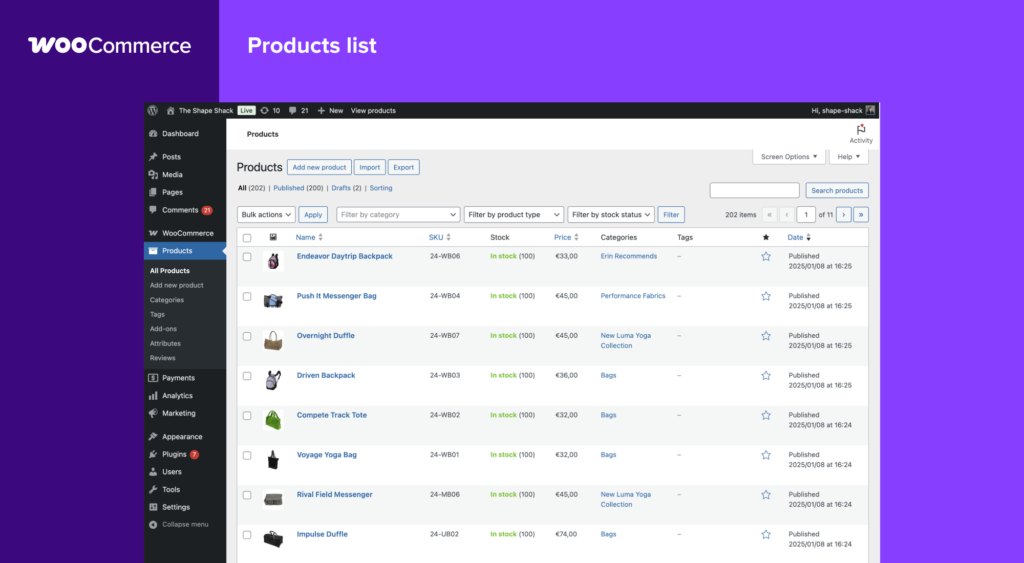
WooCommerce is the world’s most installed eCommerce platform by volume — primarily because it is free (the plugin is open source) and integrates natively with WordPress. But “free” is deceptive — hosting, extensions, security, and development quickly add up.
Strengths:
- No platform licensing cost
- Maximum flexibility and customization
- Deep WordPress content integration
- Massive extension marketplace
Weaknesses:
- High technical overhead — you manage everything
- Performance degrades without significant optimization
- Security responsibility falls entirely on you
- Poor scalability for high-volume stores without significant investment
Pricing: Free plugin; $50–$500+/month in hosting, extensions, and maintenance
Adobe Commerce (Magento)
Best for: Large enterprises with complex product catalogs, multi-brand operations, and dedicated development teams
Adobe Commerce (formerly Magento) is a powerful, deeply customizable enterprise platform. But it comes with a significant price tag and a requirement for ongoing developer investment that makes it unsuitable for all but the largest or most technically sophisticated businesses.
Strengths:
- Unmatched customization depth
- Strong B2B native features
- Multi-store, multi-brand architecture
- Advanced catalog management
Weaknesses:
- High total cost of ownership ($50,000–$500,000+/year)
- Developer-dependent for nearly everything
- Complex upgrades and maintenance
- Long implementation timelines
Pricing: Open Source (free hosting), Adobe Commerce Cloud from $22,000/year
Salesforce Commerce Cloud (SFCC)
Best for: Enterprise retailers with existing Salesforce CRM investments and complex omnichannel requirements
SFCC is deeply integrated with the Salesforce ecosystem — making it a natural choice for businesses already running Sales Cloud, Service Cloud, or Marketing Cloud. But its complexity and cost make it an enterprise-only proposition.
Pricing: Revenue-share model, typically $250,000+/year for enterprise accounts
The Decision Matrix: Which Platform Wins for Your Situation?
| Business Situation | Recommended Platform |
|---|---|
| Early-stage DTC, limited budget | Shopify Basic or Shopify |
| Growing DTC, $500K–$5M revenue | Shopify Advanced or Shopify Plus |
| $5M+ revenue, complex ops, ERP needed | Shopify Plus |
| B2B-heavy, complex pricing, no transaction fees | BigCommerce |
| WordPress-native content brand | WooCommerce (with caution) |
| Large enterprise, complex catalog, big dev team | Adobe Commerce |
| Salesforce-ecosystem enterprise | Salesforce Commerce Cloud |
| Brand requiring fully custom front-end | Headless (Commercetools, Hydrogen on Plus) |
The 7 Questions You Must Answer Before Choosing a Platform
1. What is my 3-year growth trajectory? Choose for where you will be in three years — not where you are today. The cost of migrating an established store is far greater than the cost of starting on the right platform.
2. What is my total cost of ownership (TCO)? Platform licensing is only part of the cost. Factor in: development, apps, integrations, hosting (if applicable), migration, ongoing maintenance, and transaction fees. BigCommerce’s higher base price often yields a lower TCO than Shopify when you factor in transaction-fee elimination.
3. What are my ERP and back-office integration requirements? If you need to connect your store to SAP, NetSuite, Microsoft Dynamics, or any enterprise ERP, your platform’s API access and integration ecosystem matters enormously. Shopify Plus leads here.
4. Do I have a dedicated development team? If yes: self-hosted or headless options become viable. If no: stick firmly to managed SaaS.
5. Am I selling B2B, DTC, or both? B2B requirements (customer-specific pricing, payment terms, account hierarchies) dramatically narrow your options. In 2026, Shopify Plus and BigCommerce lead the pack for hybrid B2B/DTC operations.
6. What are my international selling requirements? Multi-currency, multi-language, local payment methods, and regional tax compliance are not equally supported across platforms. Shopify Markets and BigCommerce Multi-Storefront are currently the strongest options.
7. What does my five-year exit strategy look like? If you are building to sell, platform portability and data ownership matter. Enterprise acquirers prefer platforms with robust APIs and data export capabilities.
Red Flags When Evaluating eCommerce Platforms
Watch out for these warning signs during your evaluation:
- “All-in-one” platforms with no app ecosystem. Flexibility matters. Platforms without robust third-party ecosystems trap you in their roadmap.
- Platforms that do not openly share API documentation. Opacity here signals poor integration capabilities.
- Vendors that cannot provide references from businesses your size in your industry. Insist on them.
- Pricing that seems too low. Every platform has a revenue model. If the platform is free or very cheap, you are either paying in transaction fees, forced app purchases, or data.
The Migration Question: When Is It Time to Switch?
If you are already on a platform, switching is expensive and disruptive. But sometimes it is necessary. Consider migrating when:
- Your current platform is creating technical debt that blocks growth
- Your ERP integration is impossible or prohibitively expensive on your current platform
- Your development costs on your current platform exceed the savings vs. a SaaS alternative
- Your checkout performance is measurably worse than competitors
- Your team spends more time managing the platform than growing the business
If you are considering migration in 2026, the most common path is to Shopify Plus — particularly for mid-market brands moving off WooCommerce or Magento.
Conclusion: Make the Decision Like a CEO, Not a Consumer
The right eCommerce platform is not the most popular, the cheapest, or the one your competitor uses. It is the one that best matches your business model, growth trajectory, operational complexity, and team capabilities — today and three years from now.
Take the framework in this guide. Apply it rigorously. And if you are unsure, invest in a professional platform selection consultation before you build. The cost of the right advice upfront is a fraction of the cost of the wrong platform decision.
- The Rise of Agentic Commerce: Why Your Next Customer Might Be an AI
 Agentic Commerce for the past three decades, the basic skeleton of e-commerce has remained virtually unchanged. Whether you are buying a book on Amazon, ordering groceries, or buying a subscription, the journey always ends the same way: a checkout page. You fill out a form, enter your credit card details, and click “submit.” Innovations like… Read more: The Rise of Agentic Commerce: Why Your Next Customer Might Be an AI
 - YouTube Meets WooCommerce: A Game-Changer for Social Commerce
 The Future of Social Selling Is Here Imagine watching your favorite tech reviewer demo a sleek new gadget, and with just a single click—without ever leaving the video—you can buy it. This friction-free shopping experience is no longer a futuristic dream. In a massive win for open-source e-commerce, Google and WooCommerce have officially joined forces… Read more: YouTube Meets WooCommerce: A Game-Changer for Social Commerce
 - WooCommerce ERP Integration: Automating B2B WooCommerce Stores with n8n Workflows
 Most B2B WooCommerce stores are one bad month away from operational collapse. Not because their product is wrong, or their pricing is off — but because someone is still copying order data from WooCommerce into a spreadsheet and manually entering it into an ERP. At 50 orders/month, that’s annoying. At 500 orders/month, that’s a full-time… Read more: WooCommerce ERP Integration: Automating B2B WooCommerce Stores with n8n Workflows
 - WooCommerce Automation: The Complete Guide to Running a Smarter Online Store (2026)
 Most WooCommerce store owners don’t have a sales problem — they have a time problem. If you’re manually sending order confirmations, copying data into spreadsheets, and chasing abandoned carts one by one, you’re not running a store. You’re working inside one. WooCommerce automation changes that equation completely — and the ROI goes far beyond hours… Read more: WooCommerce Automation: The Complete Guide to Running a Smarter Online Store (2026)
 - What Is an ERP System? A Plain-English Guide for Business Owners (2026)
 What is an ERP System confused? Right, let us be honest. The term “ERP” has been used by software vendors for so long, in so many different contexts, that it has lost almost all meaning for the average business owner. You have heard it. You have nodded along in meetings when someone mentioned it. But… Read more: What Is an ERP System? A Plain-English Guide for Business Owners (2026)