
Shopify Plus vs Shopify? Is your Shopify store growing? Orders are up. Revenue is climbing. And somewhere between your third conversation with a developer this month and your fifth manually exported report, a question keeps surfacing:
Is it time to upgrade to Shopify Plus?
It is one of the most consequential decisions a scaling eCommerce operator can make. Get it right, and you unlock enterprise-grade infrastructure that fuels your next growth chapter. Get it wrong, and you are paying a premium for capabilities your business is not yet ready to use.
This guide gives you the clear, unbiased answer — no fluff, no filler.
Table of Contents
- What Are the Shopify Plus vs Shopify Plans in 2026?
- The Core Differences: Shopify Plus vs Shopify Plans
- 1. Transaction Fees and Payment Processing
- 2. API Rate Limits and Performance
- 3. Checkout Customization
- 4. Shopify Flow — Advanced Automation
- 5. Shopify Plus vs Shopify Launchpad
- 6. B2B and Wholesale Capabilities
- 7. Staff Accounts
- 8. Dedicated Merchant Success Program
- 9. Headless Commerce and Hydrogen
- 10. Multi-Store Management with Shopify Organizations
- Full Feature Comparison Table | Shopify Plus vs Shopify
- When Should You Upgrade to Shopify Plus?
- When Should You Stay on a Standard Plan?
- The Real Cost of Shopify Plus: An Honest Breakdown
- Verdict: Which Plan Is Right for You in 2026?
- Conclusion
What Are the Shopify Plus vs Shopify Plans in 2026?
Shopify currently offers five core plans:
| Plan | Monthly Cost (Annual Billing) | Best For |
|---|---|---|
| Starter | $5/month | Social selling, simple links |
| Basic | $29/month | New stores, early-stage |
| Shopify | $79/month | Growing stores |
| Advanced | $299/month | Scaling stores, custom reporting |
| Shopify Plus | From $2,300/month | High-volume, enterprise |
The jump from Advanced to Shopify Plus is not a small step — it is a category shift. You are moving from a self-serve product to an enterprise platform with dedicated support, infrastructure guarantees, and a fundamentally different capability set.
The Core Differences: Shopify Plus vs Shopify Plans
1. Transaction Fees and Payment Processing
On standard Shopify Plus vs Shopify plans, if you use a third-party payment gateway (anything other than Shopify Payments), you pay an additional transaction fee 0.5% to 2% depending on your plan. At $5M in annual revenue, that fee alone can cost you $25,000–$100,000 per year.
Shopify Plus eliminates third-party transaction fees entirely. At high volumes, this saving alone can justify a significant portion of the platform cost.
2. API Rate Limits and Performance
Standard Shopify plans have API rate limits that can become a serious bottleneck as your integrations grow. Shopify Plus merchants receive significantly higher API call allowances — critical when you are running ERP integrations, PIM systems, marketing automation, and analytics platforms simultaneously.
During peak traffic events like Black Friday, Shopify Plus merchants receive priority infrastructure support, dedicated caching, and enhanced uptime guarantees. Standard plan stores queue behind Plus merchants during platform-wide high-traffic periods.
3. Checkout Customization
This is arguably the single most powerful Shopify Plus exclusive feature.
Standard Shopify plans give you a checkout you can theme and adjust superficially. Shopify Plus gives you Checkout Extensibility — the ability to build a fully custom checkout experience using checkout apps and Braintree-style integrations that can increase conversion rates by 15–36% (Shopify internal data, 2025).
For a store doing $10M per year, a 1% improvement in checkout conversion is worth approximately $100,000 in additional revenue.
4. Shopify Flow — Advanced Automation
Shopify Flow is an automation engine exclusive to Shopify Plus that allows you to build complex, multi-step business workflows without writing a single line of code.
Examples of what Shopify Flow can automate:
- Tag high-value customers automatically and trigger VIP experiences
- Pause ad campaigns when inventory drops below a threshold
- Auto-apply loyalty discounts based on lifetime order value
- Flag high-risk orders for manual review before fulfillment
- Send internal Slack alerts when specific SKUs hit reorder points
Standard plans cannot access Shopify Flow. For operations-heavy businesses, this is a transformative difference.
5. Shopify Plus vs Shopify Launchpad
Running a flash sale, product drop, or seasonal campaign? Launchpad allows Shopify Plus merchants to schedule and automate the entire campaign — price changes, theme changes, discount activation, inventory allocation — to trigger at a precise moment, without anyone needing to be at their desk at midnight.
6. B2B and Wholesale Capabilities
In 2026, Shopify Plus’s native B2B features have become one of its most compelling value propositions for hybrid brands selling both direct-to-consumer and wholesale.
Shopify Plus merchants can:
- Create customer-specific pricing and catalogs
- Set custom payment terms (Net 30, Net 60)
- Build separate B2B storefronts with a single backend
- Manage volume-based pricing rules natively
This replaces expensive wholesale app subscriptions that standard plan merchants must purchase separately — often at $200–$500 per month.
7. Staff Accounts
| Plan | Staff Accounts |
|---|---|
| Basic | 2 |
| Shopify | 5 |
| Advanced | 15 |
| Shopify Plus | Unlimited |
If your operations, marketing, customer service, and warehouse teams all need Shopify access, hitting staff account limits on standard plans is a real and frustrating constraint.
8. Dedicated Merchant Success Program
Standard Shopify support is reactive — you open a ticket, you get a response. Shopify Plus includes a dedicated Merchant Success Manager (MSM) — a named account manager who proactively helps you leverage the platform, plan for peak seasons, and navigate complex requirements.
For businesses running large campaigns, international expansions, or complex integrations, this human touchpoint is genuinely valuable.
9. Headless Commerce and Hydrogen
Shopify Plus merchants get enhanced access and support for Shopify Hydrogen — Shopify’s React-based framework for building custom headless storefronts. If your brand requires a bespoke, ultra-high-performance front-end experience decoupled from Shopify’s standard themes, Plus is your gateway to the full headless architecture.
10. Multi-Store Management with Shopify Organizations
Shopify Plus includes access to the Organizations admin — a centralized dashboard for managing multiple Shopify stores, shared users, and cross-store analytics. For brands operating multiple storefronts (by region, brand, or channel), this is an operational necessity.
Full Feature Comparison Table | Shopify Plus vs Shopify
| Feature | Advanced | Shopify Plus |
|---|---|---|
| Monthly Cost | $299 | From $2,300 |
| Transaction Fees (3rd party) | 0.5% | 0% |
| Staff Accounts | 15 | Unlimited |
| API Rate Limits | Standard | Enhanced (10x+) |
| Checkout Customization | Limited | Full Extensibility |
| Shopify Flow | ❌ | ✅ |
| Launchpad | ❌ | ✅ |
| B2B/Wholesale Native | ❌ | ✅ |
| Dedicated MSM | ❌ | ✅ |
| Multi-Store (Organizations) | ❌ | ✅ |
| Hydrogen/Headless | Limited | Full Support |
| Custom Checkout Scripts | ❌ | ✅ |
| Priority Infrastructure | ❌ | ✅ |
| SLA Uptime Guarantee | Standard | Enterprise-grade |
| ERP Integration Support | Self-serve | Dedicated Partner |
When Should You Upgrade to Shopify Plus?
Here are the six signals that tell you the time is now:
Signal 1: Revenue Above $1M–$2M Annually The math changes at this threshold. Transaction fee savings, checkout conversion improvements, and operational automation gains start to outpace the platform cost.
Signal 2: You Are Managing Complex Promotions Manually If your team is staying late to manually launch sales, change prices, or swap themes — Launchpad alone justifies the upgrade.
Signal 3: Your Checkout Is Costing You Conversions If your checkout experience feels generic and you cannot A/B test or customize it meaningfully, you are leaving money on the table every single day.
Signal 4: You Have B2B or Wholesale Customers Managing wholesale via workarounds, password-protected pages, or expensive apps is a sign you need the native B2B infrastructure that Plus provides.
Signal 5: Your ERP Integration Is Hitting API Limits If your ERP, inventory, or automation integrations are throttled by API rate limits, your entire tech stack is constrained. Plus removes that ceiling.
Signal 6: You Are Managing Multiple Stores If you are running two or more Shopify stores and managing them individually, you are wasting enormous amounts of time. Shopify Plus Organizations consolidates your operation.
When Should You Stay on a Standard Plan?
Not every business needs Shopify Plus — and that is fine.
Stay on Advanced if:
- Your annual revenue is below $1M and growing steadily but not explosively
- Your checkout conversion rate is strong and you have no complex customization needs
- You have no B2B or wholesale channel
- Your tech stack is simple — no ERP, no complex integrations
- You are a single-store operation with a small team
Shopify Plus is a powerful platform — but it is a platform designed for businesses with complexity to manage. If your operation is lean and clean on Advanced, there is no urgency to move.
The Real Cost of Shopify Plus: An Honest Breakdown
Shopify Plus pricing starts at $2,300 per month for stores under $800K in monthly revenue, shifting to a revenue-based model (0.25% of monthly revenue) above that threshold.
But the total cost of Shopify Plus includes:
- Platform fee: $2,300–$40,000+/month
- App subscriptions: Many apps have Plus-tier pricing
- Development and customization: Checkout, Hydrogen, Flow setup
- ERP and integration costs: Enhanced integrations that Plus enables
The offset factors:
- Eliminated third-party transaction fees
- Reduced app costs (native B2B replaces wholesale apps)
- Reduced developer costs (Flow replaces custom code)
- Revenue gains from checkout optimization
- Staff efficiency gains from automation
For most businesses crossing $5M in annual revenue, the net cost of Shopify Plus after offsets is significantly lower than the headline price suggests.
Verdict: Which Plan Is Right for You in 2026?
| Your Situation | Recommendation |
|---|---|
| Revenue under $500K | Basic or Shopify Plan |
| Revenue $500K–$2M | Advanced Shopify |
| Revenue $2M–$5M, simple operations | Advanced (evaluate Plus) |
| Revenue $2M+ with B2B, multi-store, ERP, or complex ops | Shopify Plus |
| Revenue $5M+ | Shopify Plus — immediately |
Conclusion
The question is not “Is Shopify Plus better than standard Shopify?” — it objectively is, across almost every capability dimension. The question is: is your business at the stage where those capabilities create more value than they cost?
For high-volume, operationally complex, or fast-scaling Shopify merchants in 2026, Shopify Plus is not a luxury. It is the infrastructure your next growth phase demands.
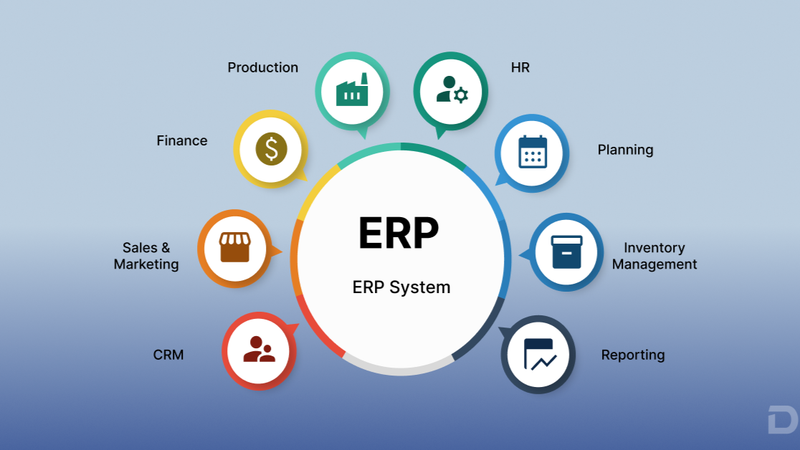


Next Step: If you are running ERP integrations on your Shopify store, read our guide:Shopify ERP Integration: The Complete 2026 Guide